
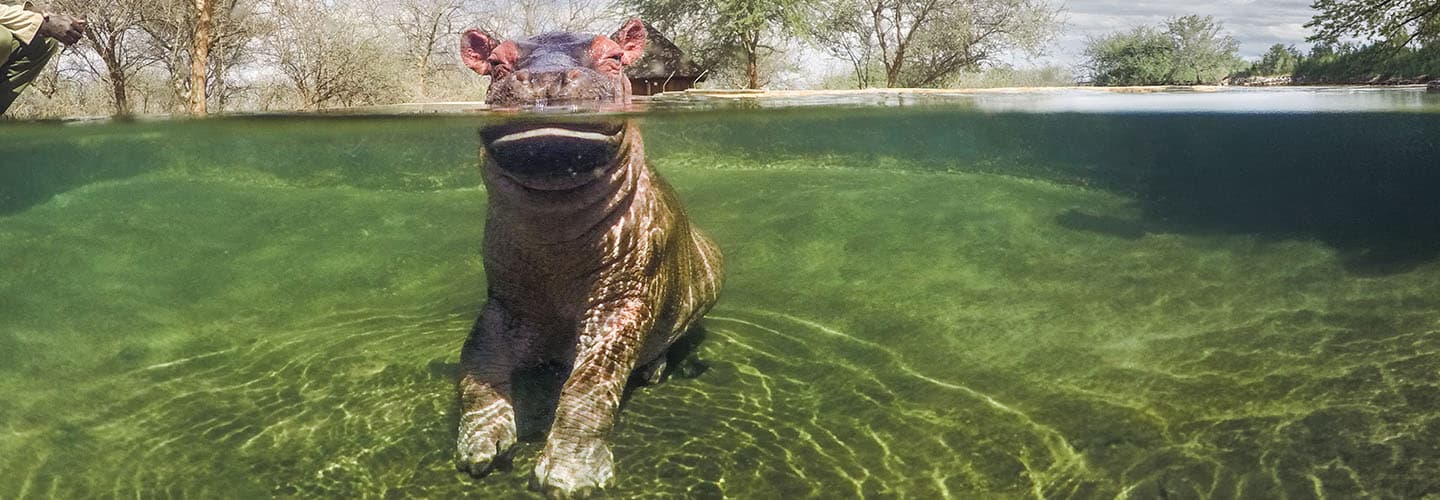

A hippo stands in shallow water with its body visible both above and below the surface

©Sheldrick Wildlife Trust/Mia Collis

Standards

Bumpy’s Fresh Start

What do you get when you pair an orphaned baby hippo with caring rescue workers? A happy ending.

Jim McMahon/Mapman®

The baby hippopotamus was scared when rescue workers found him in May. He was in a river in Kenya, a country in Africa. His mother had died. At just 1 week old, the little hippo was an orphan. 

The rescuers jumped into action and pulled the calf out of the river. The next day, an animal conservation group called Sheldrick Wildlife Trust took over. They loaded the hippo onto a helicopter and flew him to their headquarters. They named him Bumpy.

“When he arrived, Bumpy was frightened and missing his mother,” says Sean Michael, who works at Sheldrick.

But it wouldn’t be long before Bumpy went from being a scared orphan to a happy hippo.

In May, rescue workers found a scared baby hippopotamus. He was in a river in Kenya, a country in Africa. His mother had died. At 1 week old, the little hippo was an orphan. 

The rescuers jumped into action. They pulled the calf out of the river. The next day, an animal conservation group took over. It’s called Sheldrick Wildlife Trust. People from the group put the hippo in a helicopter. Then they flew him to their headquarters. They named him Bumpy.

“When he arrived, Bumpy was frightened and missing his mother,” says Sean Michael. He works at Sheldrick.

But soon Bumpy went from being a scared orphan to a happy hippo.

©Sheldrick Wildlife Trust/Mia Collis

Eat Up! Bumpy’s keepers feed him a special formula every three hours.

A New Home

Bumpy was comforted by his caretakers. On the first night in his new home, one of Bumpy’s keepers wrapped him in a blanket. He cuddled with the keeper all night, just like a human baby would do with its parents.

“He was happy to be in a place where he felt safe and loved,” says Michael.

Since then, the team at Sheldrick has been caring for Bumpy around the clock. His keepers watch him carefully and play with him. They feed Bumpy a special formula that contains all the nutrients he needs.

Hippos in the wild in Africa spend most of the day in rivers or lakes. Bumpy has a large pool instead. At sunrise, he wanders over to it and splashes around. He loves to do tricks like barrel rolls. He even naps in the pool! 

Bumpy is chatty, grunting happily all day. That’s helped him befriend other orphaned animals being raised by Sheldrick. 

“The buffaloes, zebras, giraffes, and a little orphaned elephant adore Bumpy,” Michael says.

Bumpy was comforted by his keepers. On the first night in his new home, one of them wrapped him in a blanket. Bumpy cuddled with the keeper all night. It was just like a human baby would do with its parents.

“He was happy to be in a place where he felt safe and loved,” says Michael.

Since then, the team at Sheldrick has been caring for Bumpy at all times. They watch him carefully. They play with him. And they feed him a special formula. It contains the nutrients Bumpy needs.

Hippos in the wild in Africa spend most of the day in rivers or lakes. Bumpy has a large pool instead. At sunrise, he splashes around. He loves to do tricks like barrel rolls. He even naps in the pool! 

Bumpy is chatty. He grunts happily all day. That’s helped him make friends with other animals kept at Sheldrick. 

“The buffaloes, zebras, giraffes, and a little orphaned elephant adore Bumpy,” Michael says.

©Sheldrick Wildlife Trust/Mia Collis

Sweet Dreams The hippo sleeps on a soft mattress in a stable. His keeper sleeps right next to him.

In the Wild

As happy as Bumpy is, the goal is to one day return him to the wild to live with other hippos.

“The call of the wild is strong in animals,” says Michael. “Even an orphan as strongly bonded to his keepers as Bumpy is will hear it in time.”

Like all hippos, Bumpy will face challenges. Hippos have a high risk of going extinct, or dying out completely, in the wild. The main threat is habitat loss. Human activities like farming and construction can destroy clean water sources. Poaching, or illegal hunting, is another problem. Some people kill hippos for their meat or teeth.

Wild hippos can also be a danger to each other. Rescue workers believe Bumpy’s mother died while protecting him from another hippo. 

Even though Bumpy is happy, the goal is to one day return him to the wild. There he can live with other hippos.

“The call of the wild is strong in animals,” says Michael. “Even an orphan as strongly bonded to his keepers as Bumpy is will hear it in time.”

Like all hippos, Bumpy will face challenges. In the wild, hippos have a high risk of becoming extinct. That means they could die out completely. The main threat is habitat loss. Human activities like farming and building can destroy water sources. Another problem is poaching, or illegal hunting. Some people kill hippos for their meat or teeth.

Wild hippos can also be a danger to each other. Rescue workers think Bumpy’s mother died while protecting him from another hippo.

©Sheldrick Wildlife Trust/Mia Collis

Caring for Creatures

But groups like Sheldrick are working hard to protect hippos and other at-risk species in the wild. And until Bumpy is ready to be released into the wild, his human family of caretakers will raise him.

“Animals need people to stand up for them,” says Michael. “Our wild friends need a place on our planet too.”

Groups like Sheldrick work hard to protect hippos and other at-risk species in the wild. And until Bumpy is ready to be back in the wild, his human caretakers will raise him.

“Animals need people to stand up for them,” says Michael. “Our wild friends need a place on our planet too.”

1. What steps has the team at Sheldrick Wildlife Trust taken to care for Bumpy?

2. What are some challenges that hippos face in the wild?

3. What is the meaning of conservation? What are some details in the article that help you understand this meaning?

1. What steps has the team at Sheldrick Wildlife Trust taken to care for Bumpy?

2. What are some challenges that hippos face in the wild?

3. What is the meaning of conservation? What are some details in the article that help you understand this meaning?

videos (2)
videos (2)
Skills Sheets (3)
Skills Sheets (3)
Skills Sheets (3)
Games (1)
TEACHER SUPPORT (1)
Leveled Articles (1)
Text-to-Speech