

Illustration by Jonathan Carlson; Shutterstock.com (background)

Standards

5 Big Questions About the Declaration of Independence

The document that announced America’s freedom was signed 250 years ago.

As You Read, Think About: Why did many colonists celebrate the Declaration of Independence?

1. What led to the Declaration of Independence?

Jim McMahon/Mapman®

The 13 Colonies, 1776

In the 1770s, many people in the 13 Colonies were fed up. The British government had forced the colonists to pay taxes, or extra fees, on many items. The colonists felt this was unfair. They wanted a say in how they were governed.

Anger grew until it boiled over in April 1775. The colonists fought British soldiers at the battles of Lexington and Concord in Massachusetts. The American Revolution had begun. 

A few weeks later, delegates from each colony met at the Pennsylvania State House in Philadelphia. (The building is now known as Independence Hall.) This group of delegates was called the Second Continental Congress. As they met over the next year, the American Revolution raged on. And the call for independence in the colonies grew louder.

In the 1770s, many people in the 13 Colonies were fed up. The British government had forced them to pay taxes on many items. These were extra fees. The colonists felt this was unfair. They wanted a say in how they were ruled.

Their anger boiled over in April 1775. The colonists fought British soldiers. They faced off at the battles of Lexington and Concord in Massachusetts. The American Revolution had begun. 

A few weeks later, delegates from each colony got together. They met at the Pennsylvania State House in Philadelphia. (It is now known as Independence Hall.) This group was called the Second Continental Congress. As it met over the next year, the Revolution raged on. The call for independence in the colonies grew louder.

2. Who wrote it?

iStockPhoto/Getty Images 

Independence Hall

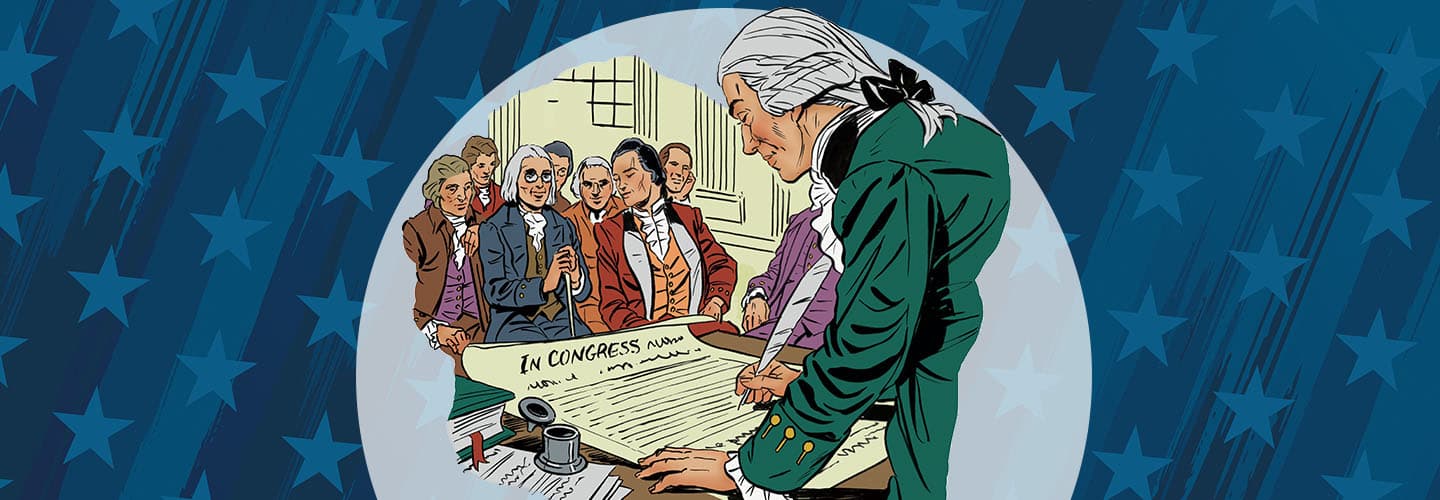
Thomas Jefferson was chosen to write the first draft of the Declaration of Independence. He worked on it for more than two weeks, finishing in late June 1776. Benjamin Franklin and John Adams then reviewed it and made some key changes. 

On July 2, the Congress officially voted to separate from Britain. The delegates then worked to finalize the Declaration. It was approved on July 4. That’s why we celebrate Independence Day on this date.

Thomas Jefferson wrote the first draft of the Declaration of Independence. He worked on it for more than two weeks. The draft was finished in late June 1776. Benjamin Franklin and John Adams then looked at it. They made some key changes.   

On July 2, the Congress voted. The colonies would separate from Britain. The delegates then worked on the final wording of the Declaration. It was approved on July 4. That’s why we celebrate Independence Day on this date.

The Declaration of Independence
Watch a video to see how the Declaration was born.

3. Everyone signed it on the Fourth of July, right?

No. Most delegates didn’t sign it until August. But John Hancock’s name was printed on the document on July 4, the day it was approved. Hancock was the president of the Second Continental Congress.

Soon after, messengers delivered copies of the Declaration throughout the colonies. It was read aloud in meetings and in town squares. Many colonists celebrated the document that declared their independence. 

No. Most delegates didn’t sign it until August. But John Hancock’s name was printed on the document on July 4. Hancock was the president of the Second Continental Congress.

Soon after, messengers delivered copies throughout the colonies. The Declaration was read out loud in meetings and in town squares. Many colonists celebrated the document that declared their freedom.

4. So what did the Declaration actually say?

Shutterstock.com

It announced that the colonies no longer wanted to be ruled by Great Britain. The 13 Colonies were now the “United States of America.” 

“It’s the official statement that says we want to be our own nation and create our own set of laws,” says Rebecca Franco. She works at the Museum of the American Revolution.

The document also outlined America’s values, such as the right to “life, liberty, and the pursuit of happiness.”

It said that the colonies no longer wanted to be ruled by Great Britain. The 13 Colonies were now the “United States of America.” 

“It’s the official statement that says we want to be our own nation and create our own set of laws,” says Rebecca Franco. She works at the Museum of the American Revolution.

The document also listed America’s values. These included the right to “life, liberty, and the pursuit of happiness.”

5. How did the Declaration affect America?

Once it was shared with the world, there was no turning back. But the colonies were united in their cause.

The road to independence was long and hard. The Revolution ended in 1783. The U.S. won and was finally its own country. By that time, the Declaration of Independence had laid the groundwork for the new nation.

“The Declaration really set up a goal of what America would be,” Franco explains.

Once it was shared with the world, there was no turning back. The colonies were united in their cause.

The road to independence was long and hard. The Revolution ended in 1783. The U.S. won. It was finally its own country. By that time, the Declaration of Independence had created a plan for the new nation.

“The Declaration really set up a goal of what America would be,” Franco explains.

1. In section 1, what does the expression “fed up” mean? What were people in the 13 Colonies fed up about?

2. What happened on July 4, 1776, to make the date significant?

3. What did it take for America to become its own country? Explain, using information from the article.

1. In section 1, what does the expression “fed up” mean? What were people in the 13 Colonies fed up about?

2. What happened on July 4, 1776, to make the date significant?

3. What did it take for America to become its own country? Explain, using information from the article.

videos (2)
videos (2)
Skills Sheets (3)
Skills Sheets (3)
Skills Sheets (3)
Games (1)
TEACHER SUPPORT (1)
Leveled Articles (1)
Text-to-Speech