


NASA
Orion
Christina Koch is getting ready to blast off. She and three other astronauts will soon travel more than 230,000 miles from Earth. They’ll zip around the moon and back at speeds of up to 25,000 miles per hour.
The 10-day mission is called Artemis II. It could happen as soon as February. It’s a big step toward the goal of landing humans on the moon for the first time since 1972. But NASA isn’t ready to send people to the lunar surface just yet. First the U.S. space agency has to make sure astronauts can get there and back safely.
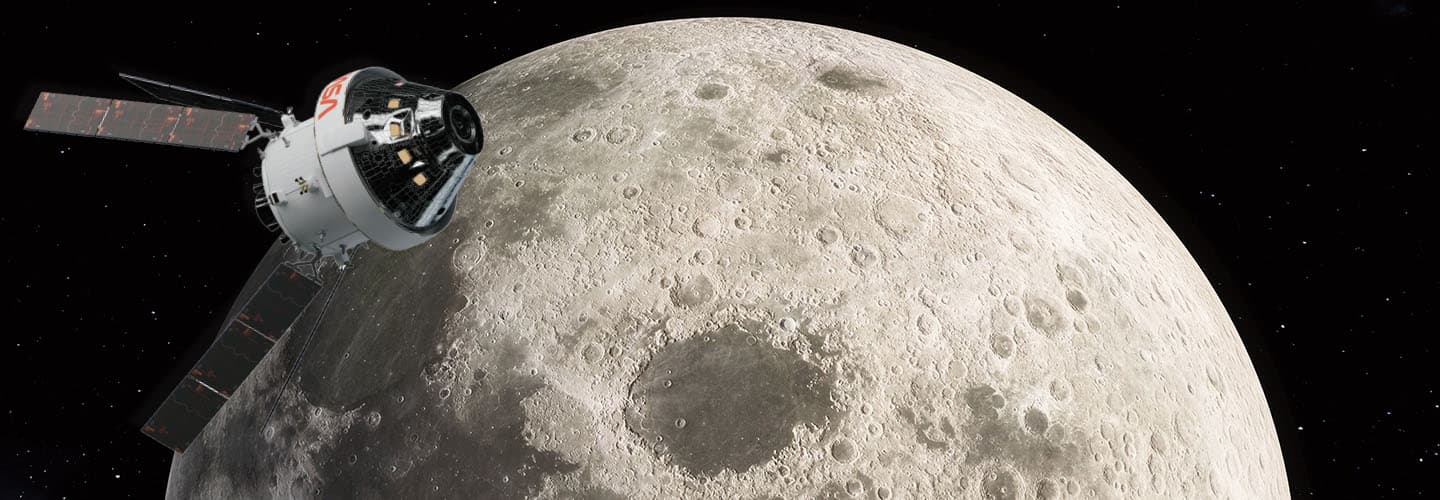
That’s where the Artemis II crew comes in. They will test that the space capsule, called Orion (above), works properly. They are planning to go beyond the far side of the moon—which we can’t see from Earth.
“We could see parts of the moon that never have had human eyes lay upon them before,” Koch says.
Christina Koch is getting ready to blast off. She and three other astronauts will soon travel more than 230,000 miles from Earth. They’ll zip around the moon and back. They’ll reach speeds of up to 25,000 miles per hour.
Their 10-day mission is called Artemis II. It could happen as soon as February. It’s a big step toward NASA’s goal of landing humans on the moon again. That hasn’t happened since 1972. But NASA isn’t ready to send people to the lunar surface just yet. First the U.S. space agency has to make sure astronauts can get there and back safely.
That’s where the Artemis II crew comes in. They will test that the space capsule, called Orion (above), works properly. They will go beyond the far side of the moon. That’s the side we can’t see from Earth.
“We could see parts of the moon that never have had human eyes lay upon them before,” Koch says.