

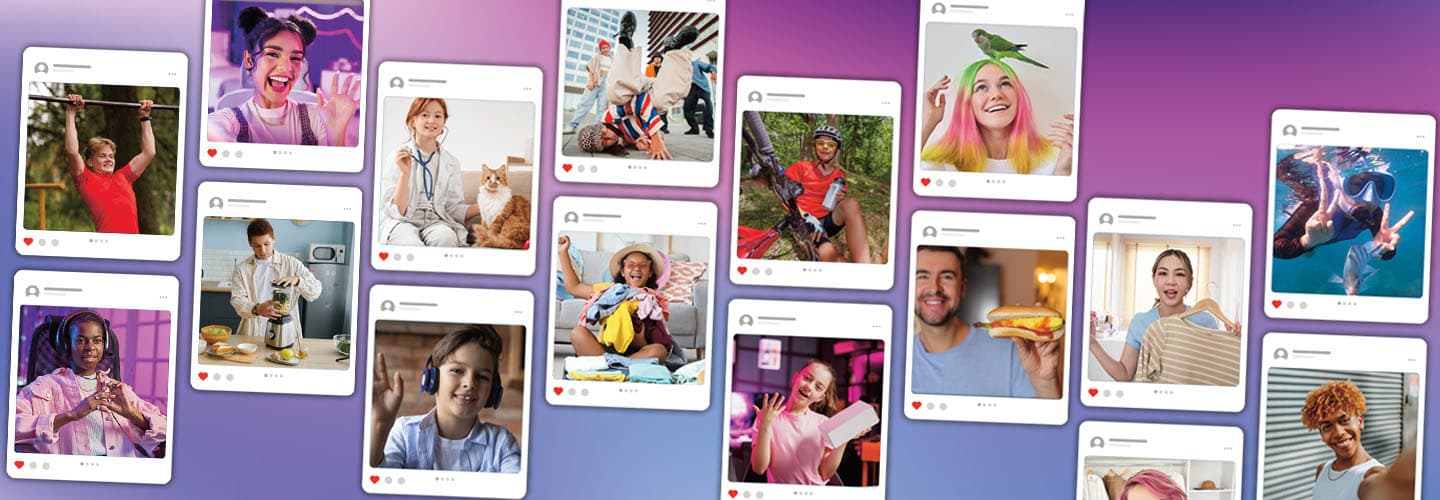

Collage of diverse young people in social media-style photo frames on a purple and blue background

Cavan Images - Offset (pull-ups); Westend61 on Offset (blender); Shutterstock.com (all other images)

Standards

Be a Smart Scroller

Find out how YouTubers and TikTokers can affect how you think and what you buy.

As You Read, Think About: What makes many influencers seem trustworthy?

Delilah Hoey was in fourth grade when some TikTok shorts showed up on her YouTube feed. The teens in the videos were showing off skin care products in colorful bottles. 

“It looked like fun,” says the 12-year-old from New Jersey. 

Delilah tried the products, but her face broke out in a painful rash. None of the influencers had mentioned that the products might not be safe for all skin types. It took almost a week for Delilah’s skin to heal.

Delilah’s experience isn’t unusual. Influencers can be very persuasive. Their social media posts can affect what you think, like, or buy. In fact, about 74 percent of Americans say they trust influencers. That’s according to a 2025 survey by Better Business Bureau National Programs. But experts say you should think twice about who you trust.

“Social media is kind of a Wild West, and there’s so much on there that’s not reliable,” says Hannah Covington. She’s a media expert at the News Literacy Project. 

Here’s what you should know so you can make smart choices online. 

How Do Influencers Make Money?
Watch a video to learn about influencer careers.

False Friends

Influencers post about almost anything you can imagine. They show off gaming tips, share health advice, or bake desserts.

Some influencers, like MrBeast, are very famous. He has more than 465 million YouTube subscribers. Others have much smaller audiences. But they all have something in common: the ability to affect your beliefs and actions. 

One reason? Many social media stars make their content feel authentic. They film close to the camera or in their homes. This can make it seem like they’re talking directly to you—like a friend on FaceTime. 

You likely don’t know most influencers in real life. Yet they may sound confident enough to trust. But that doesn’t mean they’re credible. 

“Not all influencers are experts,” Covington explains. 

She says it’s important to research what you see in a social media post. For instance, an influencer might tell you what vitamins to take. Before taking their advice, check to see if it’s backed by experts and ask your own doctor. 

“It’s up to us to fact-check,” Covington says. “Be really skeptical of people promising quick fixes or people promising miracle cures.”

Cashing In

Another way to stay safe is to ask yourself why someone is posting content. 

“Are they sharing it because there’s something in it for them?” Covington asks. 

In many cases, what’s in it for them is cash. The more views, likes, comments, and followers influencers get, the more money they can earn. Some YouTubers get paid each time you watch the ads that play before and during their videos. And if someone is praising a product, there’s a good chance a company paid them to.

Delilah learned that she needs to be cautious. She now thinks twice before adding an item to her cart. 

“If something interests me, I will research it more,” she says.

1. Based on the article, how do many social media influencers make themselves seem credible or trustworthy?

2. What is the meaning of cautious as it is used in the article? What clues in the text help you understand this meaning?

3. Why does the author include the sidebar, “Too Good to Be True?,” on page 5?

videos (2)
videos (2)
Skills Sheets (2)
Skills Sheets (2)
Games (1)
TEACHER SUPPORT (1)
Text-to-Speech