

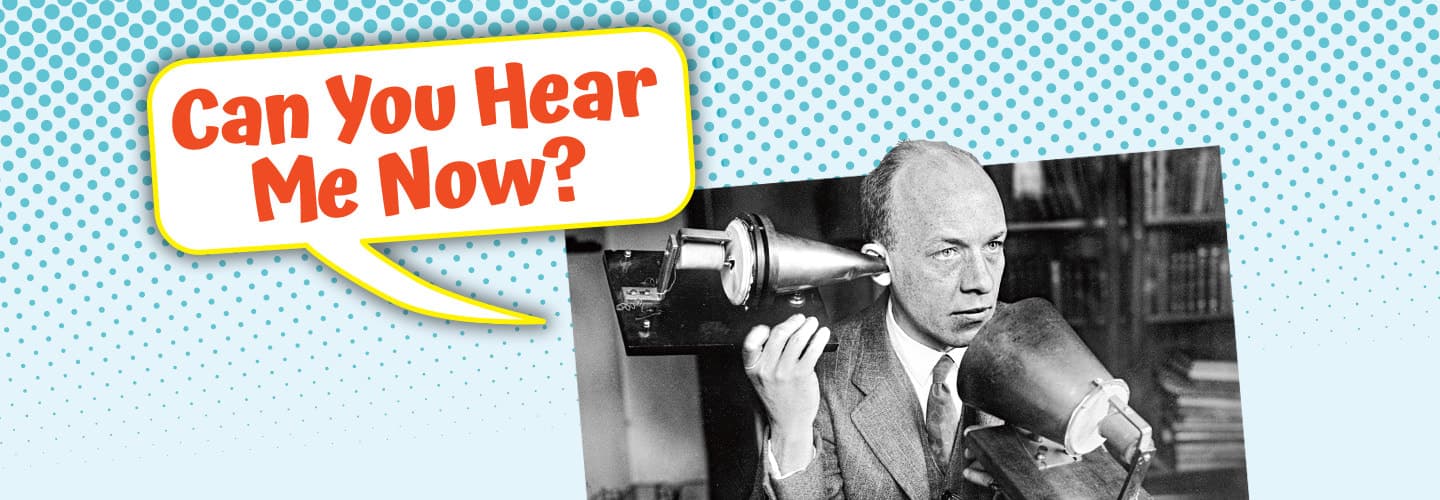

A man demonstrates how to use the first telephone.

Shutterstock.com (background); IanDagnall Computing/Alamy Stock Photo (first telephone)

Standards

Can You Hear Me Now?

It’s been 150 years since an odd-looking device changed how we communicate.

As You Read, Think About: How has the way people use phones changed over time?

Universal History Archive/Getty Images

Alexander Graham Bell

On March 10, 1876, Alexander Graham Bell walked into his office in Boston, Massachusetts.

“Mr. Watson, come here. I want to see you,” Bell said into a strange-looking device.

In another room, his assistant Thomas Watson heard the words come through a receiver. Bell had just made the first phone call in history. 

For years, inventors had been working to create a device that could transmit the human voice. But Bell was the first to get a patent for the telephone. His invention would transform the way people around the world communicate.

Inventions That Made History: The Telephone
Watch a video to explore the history of phones.

Getting in Touch

Today it’s easy to video chat with someone across the country—or across the world. But 150 years ago, staying in touch took a lot more time and effort. 

“The only way to talk to someone was to visit them in person,” explains historian Josh Lauer. 

You could send a letter. But getting a response might take weeks. A faster option was the telegraph. It sends messages using dots and dashes that stood for letters. But with the telephone, people who were miles apart could hear each other’s voices instantly.

Let’s Connect

Early on, phones were found mostly in businesses and wealthy people’s homes. But that soon changed. 

Crews laid miles of copper wire to connect phones in distant places. In 1915, while in New York, Bell called Watson in California. It was the first coast-to-coast call. 

By the 1970s, 9 out of every 10 homes in the U.S. had a phone. But the only way to make calls on the go was from pay phones in places like stores and on street corners. 

Enter the cell phone. It went on sale for the first time in the U.S. in 1983. Before long, people could make and receive calls from just about anywhere. 

Smarter Phones

As mobile phones became more popular, texting added a twist to communicating on the go. People could keep in touch with each other constantly. 

By the early 2000s, phones could connect to the internet. This allowed people to send emails and look up information at any time.

Of course, these days, making calls is just one of many ways people use their phones.

“They are computers, cameras, televisions, music players, and video game consoles,” Lauer says.

Back in 1876, Bell could never have imagined how his clunky communication tool would evolve. And who knows how phones will change next? 

1. What does the article mean when it says that 150 years ago, “staying in touch took a lot more time and effort”?

2. Why is copper wire important in the history of the telephone?

3. What is the main idea of the sidebar, “Phones Then and Now”?

videos (2)
videos (2)
Skills Sheets (2)
Skills Sheets (2)
Games (1)
TEACHER SUPPORT (1)
Text-to-Speech